
Panama Residency Options for Investors, Professionals and International Families
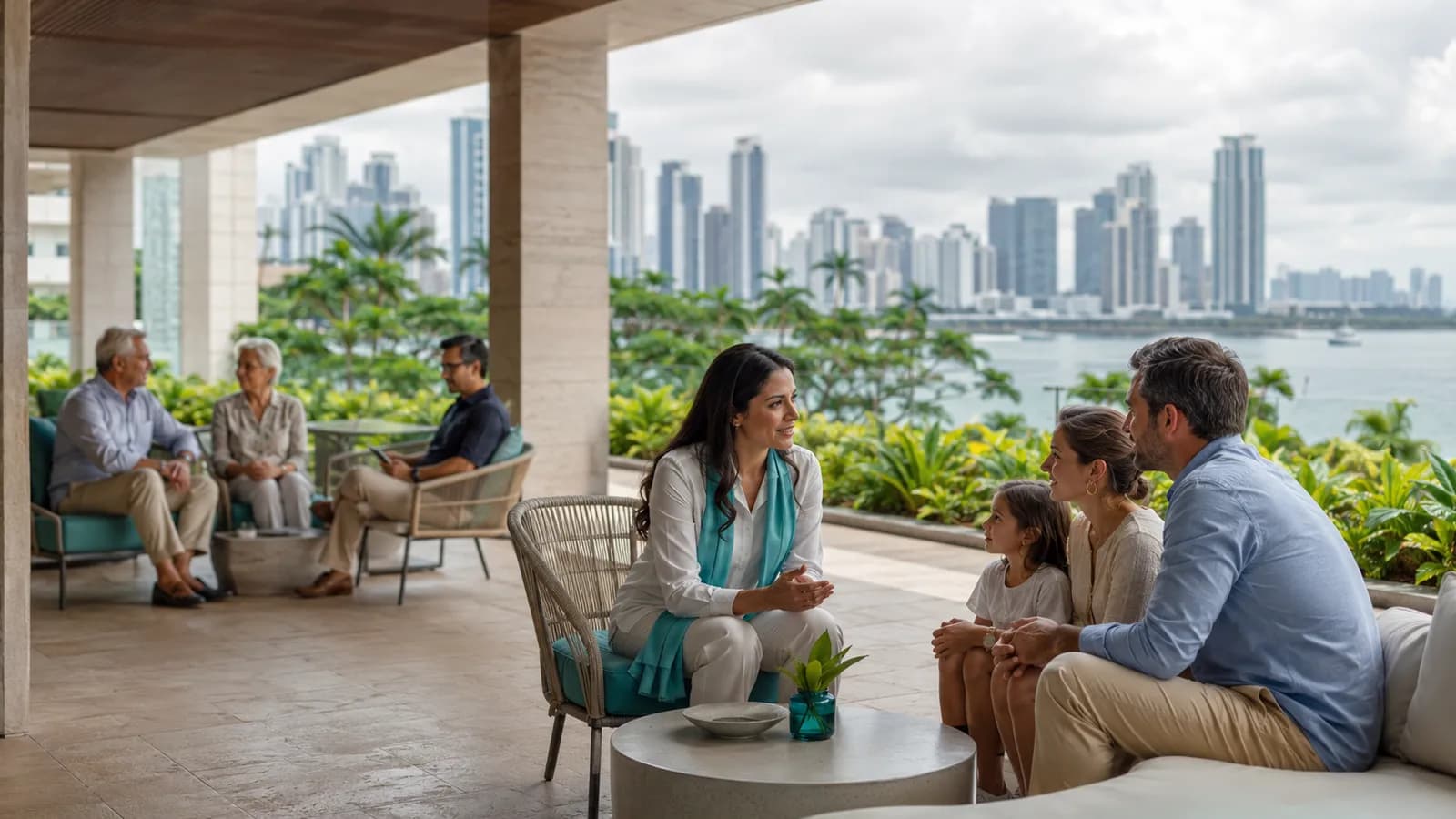
Panama offers several immigration pathways for people planning to invest, work, retire or relocate with their families. At first glance, the choice may appear straightforward: identify a category, review its requirements and submit an application.
In practice, choosing a residency route requires a broader analysis.
Two applicants may qualify under the same category but have very different priorities. One may need permanent residency as efficiently as possible. Another may be more concerned with preserving liquidity, purchasing the right property, relocating children or preparing for future banking and tax obligations. A third may not yet be ready for residency at all and may benefit from a shorter-term solution while developing a longer-term plan.
At CitizenResident, we believe that the best immigration strategy is not simply the route for which someone appears eligible. It is the one that fits the client’s objectives, family situation, investment plans, timeline and capacity to maintain the qualifying conditions.
The principal pathways at a glance
The following comparison provides a high-level overview of several commonly considered options. It is not an exhaustive list, and final eligibility must be confirmed through an individual legal and documentary assessment.
| Pathway | Qualifying basis | Initial status | Main consideration |
|---|---|---|---|
| Qualified Investor | Qualifying real estate, securities-market investment or fixed-term bank deposit | Permanent residence, subject to approval | Capital commitment, source-of-funds evidence and maintenance of the investment |
| Friendly Nations | Employment or a qualifying investment route, depending on the case | Provisional residence followed by an application for permanent residence | Nationality alone is insufficient; the qualifying connection and its supporting evidence must remain valid throughout the process |
| Pensionado | A qualifying lifetime pension, generally at least B/.1,000 per month, subject to applicable rules for property ownership and dependants | Permanent residence, subject to approval | The pension letter must satisfy formal content, authentication and continuity requirements |
| Panama–Italy Agreement | Italian nationality plus the documentation required under the bilateral framework | Permanent residence, subject to approval | Immigration, employment and corporate steps may need to be coordinated together |
| Foreign Professional | Degree, professional eligibility and the required supporting documents | Provisional residence followed by permanent residence, subject to the applicable legal requirements | Diploma authentication, recognition requirements and restrictions on certain professions |
| Remote Worker Visa | Foreign-source remote work and annual income of at least B/.36,000 | Short-stay visa; not permanent residence | Useful for temporary presence, but not a substitute for a long-term residence strategy |
1. Qualified Investor: permanent residency linked to investment
The Qualified Investor category is designed for applicants able to make and maintain a significant investment in Panama. The permitted routes include qualifying real estate, investments made through the Panamanian securities market and fixed-term deposits with qualifying banks.
For many investors, the attraction is the possibility of obtaining permanent residence without first completing a provisional residence stage. However, the immigration filing is only one component of the project.
A real-estate investor may also need to compare completed property with qualifying preconstruction structures, confirm title and encumbrances, coordinate a purchase agreement, document the lawful origin and transfer of funds, and determine whether ownership should be personal or structured through a legal entity. A securities or fixed-deposit applicant will face a different sequence involving institutional onboarding, compliance review and investment certification.
The right investment route should therefore be selected on commercial and personal grounds—not only because it meets an immigration threshold.
This option may be appropriate when:
the applicant wants permanent residence and already intends to allocate substantial capital to Panama;
the investment itself fits the applicant’s financial strategy;
the source and transfer of funds can be documented clearly; and
the applicant is prepared to maintain the qualifying investment for the required period.
2. Friendly Nations: eligibility requires more than nationality
Panama’s Friendly Nations framework applies only to nationals of designated countries. Yet holding an eligible passport does not, by itself, complete the eligibility analysis.
The applicant must establish the required connection through an accepted basis, such as employment or a qualifying investment route. The process generally begins with provisional residence and later moves to an application for permanent residence, provided the legal conditions continue to be met.
The employment route may involve more than an employment agreement. Depending on the structure, corporate, tax, municipal, social-security and work-permit requirements may also need to be aligned. The investment routes require their own evidence of ownership, funding and qualifying value.
This option may be appropriate when:
the principal applicant holds a nationality included in the current official list;
there is a genuine and supportable employment or investment basis;
the applicant is comfortable with a staged path from provisional to permanent residence; and
the qualifying basis can remain valid throughout the process.
3. Pensionado: a strong route when the pension evidence is right
The Pensionado category is one of Panama’s best-known residence options. It is generally intended for applicants who receive a qualifying lifetime pension of at least B/.1,000 per month. Different rules may apply where the applicant owns qualifying real estate, and additional financial capacity is required when dependants are included.
The apparent simplicity of the income requirement can be misleading. The decisive issue is often not the amount alone, but whether the issuing institution and the pension certification satisfy Panama’s documentary standards. The certification should clearly establish the nature, amount and lifetime duration of the pension, and foreign documents must be prepared with the required authentication or apostille and, where necessary, official translation.
Private pensions can require additional supporting evidence concerning the entity responsible for administering or paying the pension.
This option may be appropriate when:
the applicant receives a stable, qualifying lifetime pension;
the pension provider can issue compliant documentation;
the applicant’s objective is residence rather than local employment; and
the family’s dependant structure and required financial amounts have been confirmed in advance.
4. Panama–Italy Agreement: a specific route for Italian nationals
Italian nationals may have access to permanent residence under the bilateral framework between Panama and Italy. This can be a particularly valuable option, but it should not be treated as an automatic approval based solely on possession of an Italian passport.
The application requires the appropriate immigration documentation and evidence supporting the applicant’s professional or economic activity. Where the plan involves local employment, a Panamanian company or a work permit, the relevant legal steps should be organized as one connected project.
This distinction matters. Forming a company, obtaining residence, becoming authorized to work and opening a bank account are separate procedures, even when they support the same relocation objective.
This option may be appropriate when:
the applicant is an Italian national;
the intended professional or economic basis can be properly documented;
the applicant wants permanent residence in Panama; and
related corporate and employment requirements can be coordinated consistently.
5. Foreign Professional: the profession and diploma must both qualify
Foreign professionals may consider a residence route based on their university education and professional activity. The analysis must begin with the profession itself, because some occupations are reserved or restricted under Panamanian law.
The applicant’s degree, academic records and related documents may require apostille or consular authentication, official translation and, in some cases, recognition by the relevant Panamanian authority. These preparatory steps can affect the timeline significantly.
Professional residence should also be distinguished from authorization to work. Immigration status and labour authorization are connected but separate legal matters.
This option may be appropriate when:
the applicant holds a university degree relevant to a profession that foreigners may exercise in Panama;
the academic documents can satisfy the authentication and recognition requirements;
the applicant accepts a staged residence process; and
the immigration and employment strategy are reviewed together.
6. Remote Worker Visa: useful flexibility, but not permanent residence
For professionals employed abroad or providing independent services to clients outside Panama, the Remote Worker Visa may offer a practical way to stay in the country while continuing foreign-facing work. The official requirements include foreign-source activity and annual income of at least B/.36,000.
This is a short-stay immigration category, not permanent residence. It may be useful for someone testing life in Panama, spending an extended period in the country or preparing a future relocation. It should not be selected under the assumption that it provides the same long-term status as a permanent residence permit.
This option may be appropriate when:
the applicant’s work produces effects outside Panama;
income is received from foreign sources and meets the applicable threshold;
the immediate objective is temporary lawful presence rather than permanent residence; and
the applicant wants time to evaluate a longer-term plan.
Comparison points that should guide the decision
Residency planning should compare more than the minimum qualifying requirement.
Temporary, provisional or permanent status
Some pathways lead directly to permanent residence, while others begin with provisional status or provide only a short stay. The practical difference affects long-term planning, family arrangements and the timing of later procedures.
Capital commitment and liquidity
An investment-based route may provide a direct path to permanent residence, but it can require substantial capital to remain committed for several years. The immigration advantage should be weighed against the client’s broader investment objectives and liquidity needs.
Employment and professional restrictions
Residence does not automatically authorize every type of work. Work permits, regulated professions, corporate compliance and employment structures must be examined separately.
Family composition
The correct route may change depending on whether the application includes a spouse, minor children, adult children who remain students or other eligible dependants. Ages, dependency evidence, school documentation and family certificates should be reviewed before filing—not after a deadline or document issue appears.
Document availability and timing
Police records, civil-status certificates, pension letters, academic documents and financial records may originate in different countries. Their validity periods, apostilles, legalizations and translations must be coordinated carefully. A theoretically suitable category may not be the most practical if essential evidence cannot be obtained on time.
Banking, tax and property objectives
Residency, tax residence, banking access and property ownership are related but distinct matters. Approval of one does not guarantee another. The client’s intended source of income, movement of funds, future presence in Panama and ownership structure should be reviewed by the appropriate professionals.
Why personalized attention changes the outcome
An immigration checklist can identify documents. It cannot identify the best strategy for a particular person.
At CitizenResident, personalized guidance begins by understanding the client’s real objective: permanent relocation, investment diversification, retirement, family mobility, professional activity or a period of exploration in Panama. We then help connect the relevant workstreams and independent specialists around that objective.
Depending on the engagement, this may include:
comparing eligible immigration pathways and their practical trade-offs;
mapping the sequence of legal, investment, banking, corporate and relocation steps;
identifying dependencies before funds are transferred or documents expire;
coordinating communication among the client, assigned attorney and other authorized professionals;
organizing requirements for family members across different countries; and
maintaining a clear view of responsibilities, pending decisions and next steps.
This coordinated approach is particularly important for international families. The principal applicant’s preferred category may not be the best option for the family as a whole. School calendars, travel availability, dependant eligibility, document validity and the family’s medium-term financial plan may all influence the final recommendation.
The right starting point is a personal assessment
Panama provides meaningful options for investors, professionals, retirees and international families, but there is no universal “best visa.” A route that offers speed may require a larger capital commitment. A route with a lower financial threshold may involve provisional status, additional employment requirements or a longer sequence. A temporary visa may provide flexibility without addressing a long-term residence goal.
Before selecting a category, applicants should compare:
their principal objective in Panama;
the status and timeline offered by each route;
the investment, income or professional basis they can genuinely maintain;
the needs of every accompanying family member;
the availability and validity of supporting documents; and
the related banking, tax, corporate and property implications.
CitizenResident helps international clients bring these elements into one coherent plan, with personalized guidance and access to the appropriate independent professionals for each part of the project.
Planning residency in Panama? Contact CitizenResident to arrange an initial assessment of your objectives, potential pathways and required next steps.
This article is provided for general informational purposes only and does not constitute legal, tax, investment or financial advice. Immigration rules, thresholds, official interpretations and documentary requirements may change. Eligibility and strategy should be confirmed for each applicant with the appropriate licensed professionals before taking action.